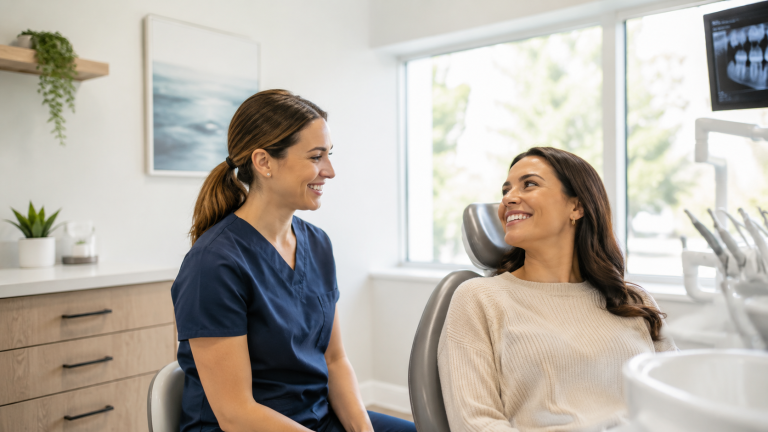

You often avoid the dentist because anxiety or cost makes appointments feel impossible, but affordable sedation dentistry in Brooklyn can change that. You can get safe, effective sedation at accessible prices with the right practice, letting you complete necessary care without prolonged fear or discomfort.
They explain what sedation options involve, how sedation makes procedures more comfortable, and where neighborhood dentists offer affordable plans or payment options. You’ll learn how to choose a practice, prepare for your visit, and recover smoothly so a tense dental appointment becomes manageable and stress-free.
Sedation dentistry reduces anxiety and manages pain so patients can complete dental care comfortably. It includes methods ranging from mild relaxation to medically controlled sleep, plus monitoring before, during, and after treatment.
Sedation works by altering a patient’s awareness and response to stimuli through medications that target the central nervous system. Local anesthetic still numbs the tooth and surrounding tissue for pain control, while sedatives reduce anxiety, memory of the procedure, and sometimes consciousness.
Providers choose dosage and route based on the patient’s health, procedure length, and anxiety level. They monitor vital signs—heart rate, blood pressure, oxygen saturation—throughout the appointment. Recovery varies: nitrous oxide wears off minutes after inhalation stops, oral sedatives may take several hours, and IV sedation often requires supervised monitoring until discharge criteria are met.
Pre-procedure instructions typically include fasting, medication review, and arranging a ride home for moderate or deep sedation. The dentist or anesthesiologist documents medical history and obtains consent before proceeding.
Common dental sedation falls into four categories: nitrous oxide (laughing gas), oral sedatives, IV sedation, and general anesthesia. Nitrous oxide provides mild relaxation and allows quick recovery; a patient remains awake and responsive. Oral sedatives, like a short-acting benzodiazepine, induce moderate sedation and partial memory loss; they require dosing an hour before the appointment.
IV sedation gives rapid, adjustable effects and deeper relaxation while maintaining protective reflexes in many cases. General anesthesia creates complete unconsciousness and is reserved for extensive procedures or when other methods aren’t suitable. Each option carries specific risks and monitoring requirements; for example, IV and general anesthesia need more comprehensive airway and cardiovascular oversight.
Dentists in Brooklyn often coordinate with certified anesthesiologists for IV or general anesthesia. Cost, clinic resources, and patient medical history influence the choice of sedation.
Patients with severe dental anxiety or a history of postponing care benefit from sedation to receive timely treatment. Those undergoing complex or lengthy procedures—such as multiple extractions, full-mouth restorations, or implants—often choose sedation for comfort and stillness during treatment.
People with strong gag reflexes, difficulty sitting for long periods, or special healthcare needs may also qualify. Medical conditions, pregnancy, and certain medications can contraindicate some sedation types, so a full medical evaluation is essential. Older adults and patients with obstructive sleep apnea need individualized risk assessment and sometimes alternative approaches.
Dentists evaluate benefits against risks, discuss options in plain language, and develop a tailored plan that prioritizes safety, comfort, and successful outcomes.
Sedation dentistry helps patients stay calm, comfortable, and cooperative during a range of procedures. It reduces fear, limits movement, and allows clinicians to complete care more efficiently and safely.
Sedation targets the root causes of dental fear: noise, gag reflex, and perceived pain. Oral sedatives like low-dose benzodiazepines produce relaxing effects within 30–60 minutes, lowering heart rate and easing muscle tension without eliminating consciousness. Intravenous (IV) sedation offers deeper relaxation and rapid adjustment of drug levels for patients with high anxiety or lengthy procedures.
Clinicians screen medical history and current medications to choose an appropriate sedative and dose. They also combine topical anesthetic, local numbing, or nitrous oxide when needed to ensure procedures feel painless. Patients report fewer memory fragments of treatment, which helps break the cycle of dental avoidance.
Modern dental sedation follows clear protocols to maintain safety throughout treatment. Vital signs—blood pressure, oxygen saturation, and heart rate—get monitored continuously, especially with IV or deep sedation. Staff trained in advanced cardiac life support remain present, and emergency equipment sits ready in the operatory.
Pre-procedure assessment includes a review of medical conditions such as sleep apnea, obesity, and cardiovascular disease, and adjustments to medication or fasting instructions. Clinics in Brooklyn that advertise affordable sedation typically partner with licensed anesthesiologists or sedation-certified dentists to meet state regulations and minimize risk.
Sedation lets dentists perform multiple or complex procedures in fewer appointments. For example, a patient with several extractions, deep cleanings, or a full-mouth restoration can often complete treatment in one session instead of multiple visits spread over weeks. This reduces time off work and lowers cumulative travel and consultation costs.
Efficiency also benefits treatment quality. With a still, cooperative patient, the clinician can focus on precision—placing implants, shaping crowns, or completing endodontic work without interruptions. Many patients find that the overall cost and logistical burden of care decreases when sedation enables comprehensive treatment in concentrated sessions.
Brooklyn patients can find several practical ways to make sedation dentistry affordable, from community programs to flexible payment options and insurance considerations. Each path has specific eligibility, cost ranges, and steps that help patients access safe, comfortable sedation treatments.
Many Brooklyn clinics partner with community health centers and dental schools to offer reduced-cost sedation services. Federally Qualified Health Centers (FQHCs) like the Woodhull or East New York clinics sometimes provide oral sedation or nitrous oxide at lower fees, often based on income or a sliding scale.
Dental schools such as NYU College of Dentistry occasionally run clinics where supervised students perform procedures with sedation for reduced rates. Appointments may take longer, and eligibility can include residency in certain zip codes or proof of income. Nonprofit organizations and community-based programs also run periodic clinics or vouchers for low-income adults needing complex dental work with sedation.
Patients should call ahead to confirm which sedation methods are offered, ask about wait times, and verify documentation required for sliding-scale discounts. Bringing recent medical records and a list of medications speeds the intake process and helps clinics determine safe sedation options.
Many private dentists in Brooklyn offer in-house payment plans that split treatment costs into monthly installments. Typical plans range from 3 to 12 months interest-free for smaller balances, while larger procedures might be extended to 24–60 months with low interest.
Third-party financing companies such as CareCredit, LendingClub Patient Solutions, and Sunbit specialize in dental care loans. They provide instant prequalification, variable APRs, and promotional periods; patients should compare total repayment costs and penalties for missed payments. Asking for a detailed payment schedule and total interest paid helps avoid surprises.
Patients with high upfront costs can request phased treatment—prioritizing urgent work under sedation and postponing elective procedures. Dentists often provide written cost estimates and coordinate with financing to schedule treatment once preapproval is secured.
Dental insurance coverage for sedation varies widely; many policies cover nitrous oxide or sedation when medically necessary but exclude elective conscious sedation. Patients should review plan language or call customer service to confirm coverage specifics, including preauthorization requirements and in-network provider lists.
Medical insurance can cover sedation when dental work relates to a medical condition (e.g., surgery for oral cancer or treatment under general anesthesia). Getting a clinician’s letter explaining medical necessity increases chances of reimbursement. Keep copies of itemized bills with CDT, CPT, and anesthesia codes to file efficient claims.
For out-of-network care, ask the dentist for a superbill to submit to insurance. Patients should also check annual maximums, deductibles, and any waiting periods. Comparing expected out-of-pocket costs between in-network clinics, community programs, and financed private care helps choose the most affordable, safe option.
Contact a trusted Brooklyn dental office to discuss which combination of programs, plans, and insurance options fits a patient’s budget and comfort needs.
Choosing a dental practice means weighing practical details and clinical competence. Patients should focus on patient comfort, cost transparency, and verified clinical credentials when selecting an affordable sedation dentist in Brooklyn.
Look for clear pricing and financing options before booking a visit. Practices should publish sedation fees, whether they accept Medicaid or private insurance, and offer payment plans or CareCredit to keep sedation affordable.
Check the office environment for comfort features: private recovery areas, noise-reducing design, and staff trained in patient anxiety management. Friendly front-desk staff who explain procedures and estimated visit times reduce stress and streamline appointments.
Read recent patient reviews that mention sedation specifically—search for comments about nausea control, recovery experience, and communication about risks. Ask whether the dentist performs pre-sedation health screenings and provides written consent forms that list potential side effects.
Confirm availability and scheduling flexibility. Practices that offer evening or weekend appointments and short wait times help patients avoid missed work and extra costs.
Verify that the dentist holds a valid New York State dental license and lists sedation credentials on their website. Relevant certifications include Advanced Cardiac Life Support (ACLS) or Pediatric Advanced Life Support (PALS) when deeper sedation or child patients are involved.
Look for documented training in sedation dentistry—courses from the American Dental Association (ADA) or the American Dental Society of Anesthesiology (ADSA) indicate up-to-date protocols. Ask how many sedation cases the dentist performs monthly; higher case volume generally correlates with smoother management of complications.
Confirm on-site emergency equipment and protocols: pulse oximeter, capnography, oxygen supply, and written emergency response plans. Verify that an anesthesiologist or sedation-trained dentist supervises moderate to deep sedation and that recovery monitoring follows ADA guidelines.
Request copies of staff certifications and ask about continuing education frequency. Practices that update sedation training every one to two years demonstrate commitment to safety and current standards.
Patients will learn how to get ready physically and mentally, what paperwork and medical details to bring, and practical tips for arriving comfortably and on time.
The dental office will ask about medical history, current medications, and any allergies when scheduling or at arrival. Bring a list of prescriptions (including dosages), over-the-counter drugs, and recent medical records that relate to anesthesia or heart/blood conditions.
If the patient uses tobacco, alcohol, or recreational drugs, they should report that; these affect sedation choice and dosing.
The practice will review fasting instructions if IV or oral sedation is planned. Generally, no solid food for 6–8 hours and only clear liquids up to 2 hours before an IV procedure, but follow the clinic’s specific instructions.
Expect a pre-procedure consent form and a short physical check (blood pressure, pulse). The team may recommend arranging a responsible adult to drive the patient home and stay for the first hour after sedation.
First-time patients should arrive 10–15 minutes early to complete or verify forms and discuss concerns with the dentist or sedationist. Bring a photo ID and dental insurance card, if applicable, and a list of questions about risks, recovery time, and alternatives.
Wear loose, comfortable clothing and remove jewelry or contact lenses. Avoid heavy makeup and nail polish if oxygen monitoring will be used.
Communicate anxiety and prior dental experiences candidly; staff can offer strategies like nitrous oxide, oral sedatives, or IV sedation options. Plan for the day after the procedure—no important meetings or childcare duties—so the patient can rest and recover safely.
Patients should follow specific steps to manage discomfort, protect healing tissues, and spot signs of complications. Clear instructions about eating, activity, medication, and follow-up help speed recovery and reduce anxiety.
Advise patients to rest for 24 hours after sedation and avoid driving or operating heavy machinery for at least 24 hours; arrange a responsible adult to take them home. Suggest staying upright in a reclined position to reduce nausea and avoid bending or heavy lifting for the day.
Recommend a soft-food diet for 24–48 hours: yogurt, smoothies (no straw), mashed potatoes, and scrambled eggs. Encourage sipping water frequently to stay hydrated, and avoid hot beverages until numbness fully resolves to prevent burns.
Provide clear medication instructions: take prescribed pain relievers and antibiotics exactly as directed, and use acetaminophen or ibuprofen per dosing guidance if no prescription was given. Warn about common, temporary side effects — grogginess, mild nausea, dry mouth — and advise resting until they pass.
Offer local care tips: keep any gauze in place until bleeding slows, apply a cold pack 15 minutes on/15 off for the first 6–8 hours to reduce swelling, and after 24 hours switch to warm compresses if swelling persists. Maintain gentle oral hygiene—brush teeth avoiding the surgical site and rinse with saline or an antiseptic rinse after 24 hours.
Instruct patients to call the dental office immediately for uncontrolled bleeding that soaks through two gauze pads in one hour. Also advise contact for high fever over 101.5°F (38.6°C), severe or worsening pain not relieved by prescribed medication, or persistent vomiting.
Recommend contacting the clinic if they notice signs of infection: increasing swelling after 48–72 hours, foul taste or odor, or pus at the site. Tell them to report any shortness of breath, chest pain, sudden weakness, or allergic reactions such as hives or facial swelling.
Remind patients to keep their follow-up appointment for stitch removal or evaluation, and to use the office phone number for after-hours concerns. If the practice offers a sedation follow-up call, encourage patients to answer so the team can check recovery and adjust care if needed.
Many patients worry that sedation means losing control or being put completely to sleep. Sedation has levels—from minimal, where patients stay awake and relaxed, to deep, where they may be lightly asleep but breathe on their own. The dentist reviews medical history and chooses the safest option for each person.
People often think sedation is only for lengthy procedures. Sedation can help with routine treatments, anxious visits, or when sensitivity makes care difficult. It can shorten appointment stress and improve cooperation for precise work.
Cost is a common concern. Affordable sedation options exist, and many practices discuss pricing, insurance coverage, and payment plans upfront. Asking about fees and alternatives helps patients plan without surprises.
Safety myths persist, such as sedation being risky for healthy adults. Modern sedation uses measured doses and monitoring—pulse, oxygen, and blood pressure—so clinicians can respond immediately. Clinics follow protocols and require clear pre-visit instructions to minimize complications.
Some assume they’ll need long recovery time or miss work. Recovery varies by sedative used; minimal sedation poses little downtime while deeper sedation may require a few hours of rest and a ride home. The office provides tailored aftercare instructions.
Patients worry about communication loss during treatment. Dentists explain what to expect and maintain simple signals to ensure consent and comfort. Encouraging questions before the appointment reduces fear and builds trust.
If concerns remain, the practice invites a pre-treatment consultation to review options, risks, and costs so patients decide with confidence.
Patients benefit when the dental team explains sedation options clearly and calmly. They feel more comfortable knowing what to expect before, during, and after a procedure.
Staff should use plain language and answer questions patiently. This creates trust and reduces anxiety, especially for first-time sedation patients.
Offering a short checklist helps patients prepare practically. Example checklist:
Comfort measures in the office make a real difference. Warm blankets, noise-cancelling headphones, and clear progress updates help patients relax during treatment.
Personalized sedation plans respect each patient’s needs and health profile. The dentist reviews risks and benefits, choosing minimal effective sedation whenever possible.
Encouraging small steps builds confidence over time. Scheduling shorter appointments or familiarization visits lets anxious patients become comfortable with the team and setting.
Remind patients they can speak up at any time about discomfort or questions. Open communication supports safety and leads to better outcomes.
Invite patients to call or book a consultation to discuss affordable sedation options. A friendly conversation can clarify choices and set the stage for a calm, positive visit.
This section answers common cost, safety, and coverage concerns about sedation dentistry in Brooklyn. It focuses on typical fees, the sedation options dentists use, safety with medical conditions, emergency use, and payment or insurance help.
Costs vary by type: nitrous oxide often runs $20–$80 per visit, oral sedatives $50–$200, and IV sedation $250–$800 or more. Clinic location in Brooklyn, provider experience, length of procedure, and whether an anesthesiologist is required raise or lower the price.
Complex cases that need monitoring equipment or additional staff push costs higher. Simple single-tooth procedures with minimal sedation sit at the lower end of the range.
Common options include nitrous oxide (laughing gas), oral sedatives (pill before the visit), and IV sedation (administered in-office). The dentist chooses based on procedure length, patient anxiety level, medical history, and recovery needs.
Patients with mild anxiety often start with nitrous oxide. Those needing deeper relaxation for longer or complex work may be recommended oral or IV sedation after a medical review.
Safety depends on the specific condition and medications. Dentists review medical history, current prescriptions, and sometimes consult a physician to adjust doses or choose an alternative sedation method.
Certain conditions—severe respiratory problems, some heart issues, or interactions with benzodiazepines/other CNS depressants—may require special precautions or rule out specific sedatives. Clear, accurate disclosure of health history keeps sedation safer.
Yes; many practices provide nitrous oxide or oral sedatives for urgent pain or trauma to reduce anxiety and allow treatment. Availability depends on office hours, staffing, and the patient’s medical status.
IV sedation for emergencies is less common on short notice and may require coordination with an anesthesiologist. Call ahead to confirm what the Brooklyn office can safely provide in an emergency.
Many Brooklyn dental offices offer in-house payment plans, third-party financing (CareCredit or similar), or split billing for sedation and dental work. Practices sometimes bundle sedation with the procedure for a single, clearer price.
Patients should ask about upfront estimates, interest rates, and eligibility for financing before scheduling. Clear payment discussions help avoid surprises.
Medicaid coverage varies by state and plan; basic emergency dental care may be covered, but sedation is often limited or excluded. Private dental insurance sometimes covers part of sedation when it’s medically necessary, but nitrous oxide and oral sedation may still require out-of-pocket payment.
Patients should contact their insurer and the dental office beforehand to verify benefits and obtain preauthorization if needed. This step clarifies potential patient responsibility before treatment.